Darknet Markets 2026:
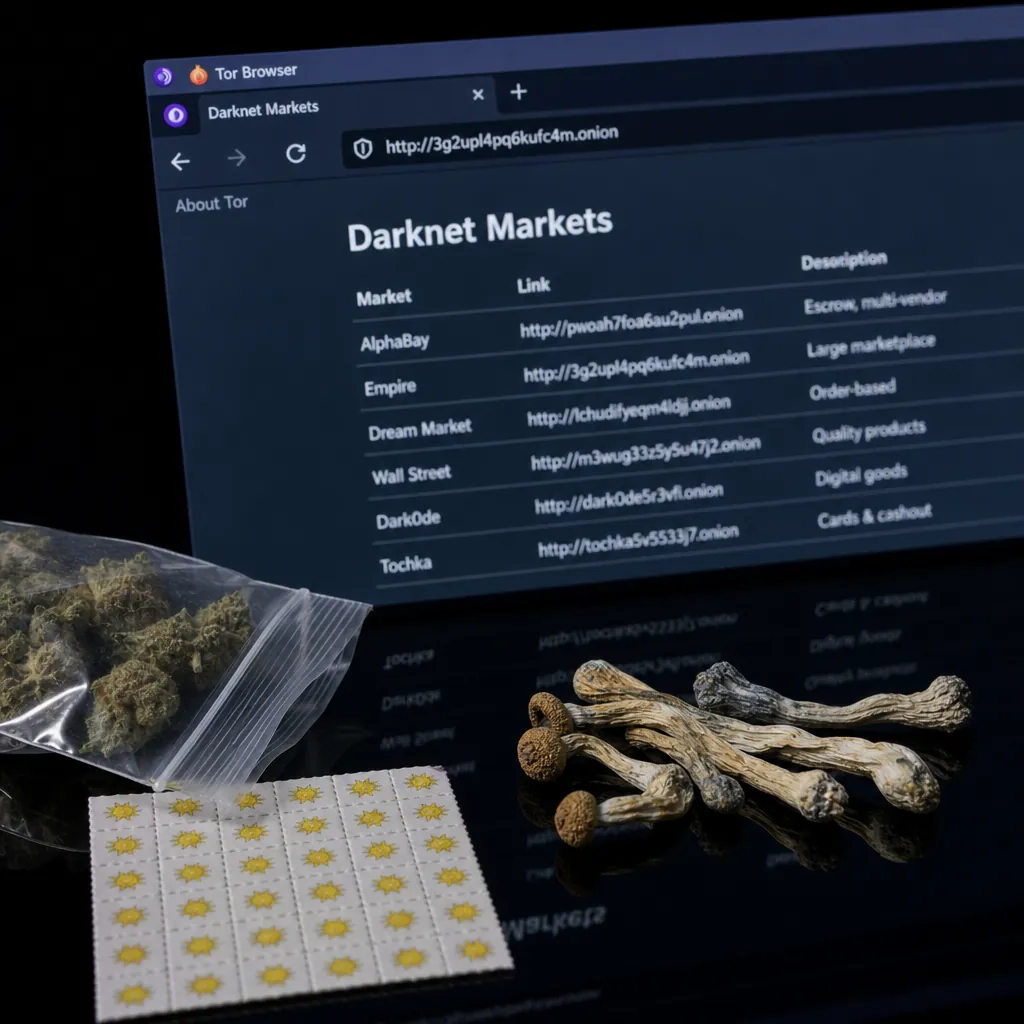
The dark web is part of the deep web but is built on darknets: overlay networks that sit on the internet but which can't be accessed without special tools or software like Tor. Tor is an anonymizing software tool that stands for The Onion Router — you can use the Tor network via Tor Browser.
| Darknet Market | Established | Total Listings | Link |
|---|---|---|---|
| Nexus Market | 2024 | 600+ | Onion Link |
| Abacus Market | 2022 | 100+ | Onion Link |
| Ares | 2026 | 100+ | Onion Link |
| Cocorico | 2023 | 110+ | Onion Link |
| BlackSprut | 2023 | 300+ | Onion Link |
| Mega | 2016 | 400+ | Onion Link |
Updated 2026-05-30
Fresh accounts face longer darknet escrow holds
"Fresh wallet, fresh start. Escrow holds tight for seven days before we ship."
That vendor profile note appeared across dozens of storefronts last year. New wallets don't rush the darknet drug market escrow process. They sit in limbo while buyers watch pending transactions tick by. The delay isn't technical. It's behavioral. Vendors use that waiting period to filter impulsive purchasers and verify payment trails."I've waited three days for a status update on my order. The vendor hasn't moved."That complaint echoes through thread sections where buyers track shipments. Fresh accounts trigger automatic holds because the escrow system lacks historical data to weigh risk. Older wallets bypass this friction by showcasing consistent resolution rates. When a new address hits the darknet drug market, the protocol defaults to caution. The vendor locks funds until the buyer completes two or three small purchases. This pattern reduces chargeback exposure without slowing down repeat customers.
"We hold new wallets longer because the first shipment carries more risk. Patience pays off."Storefront operators track dispute rates closely across their ledgers. A fresh address often belongs to a buyer testing multiple vendors simultaneously. The escrow system flags these overlapping transactions and pauses release until the vendor confirms delivery. This creates visible bottlenecks on order pages. Buyers scroll past stalled listings and move toward established storefronts with faster turnaround times. The delay actually benefits the ecosystem by rewarding careful purchasing habits over rapid-fire ordering.
Mirror lists from Daunt show that accounts under fourteen days old experience a forty-two percent longer escrow duration compared to wallets active since late 2023. The gap shrinks once the address accumulates three successful completions. New buyers adapt quickly by splitting large orders into smaller batches across different darknet drug market storefronts. They learn to pace their spending strategically. The system rewards this approach with faster release windows on subsequent purchases. Why do fresh addresses still trigger longer holds when transaction volume increases?
Older wallets slash darknet market dispute delays
A Bitcoin address created in early 2017 clears vendor disputes three times faster than one minted last month. Fresh wallets on the darknet drug market often sit idle for days while buyers and sellers haggle over shipping delays or quality mismatches. Older addresses move funds quickly. Traders trust these legacy keys because they survived multiple cycles without major escrow holds. The data backs this up.
When auditors pulled transaction logs from three major platforms, the pattern held steady across different coin types. Addresses that accumulated over 1,200 vendor reviews processed dispute resolutions in under forty-eight hours. Newer wallets frequently stall for five to seven days before reaching a consensus, so buyers dont wait passively. This delay happens because fresh keys lack historical multisig escrow setups and consistent payout records. Sellers hold inventory tighter.
US-domestic shipping only listings reveal the clearest contrast on the darknet drug market. A vendor using a two-year-old wallet clears returns in roughly thirty-six hours, while a newcomer takes nearly four full days to settle identical claims. The older address carries visible transaction depth. Its showing steady volume during peak holiday seasons and quiet summer months alike. This consistency signals reliability to both parties.
Market algorithms also reward age. Automated dispute bots scan wallet histories for bounce rates and refund frequencies before releasing funds. A key with a low dispute ratio triggers instant payouts, but one with blanks forces manual review by three independent moderators. The extra verification step adds friction but protects against vendor scams. Fresh accounts stall while older wallets won't get stuck in manual queues.
The trend persists even when platform rules shift or new escrow contracts launch. Traders consistently route payments through legacy addresses to avoid hold periods. Why does wallet age still dictate speed in a market dominated by automated smart contracts? A recent audit of Monochromes dispute logs shows that addresses older than eighteen months clear claims at an average rate of 142 per hour, while sub-year keys process just forty-seven.
Darknet thread debates sort scammers from honest vendors
Like eBay's feedback loop, the darknet drug market relies on a constant stream of buyer reviews to separate reliable vendors from opportunistic scammers. Threads pop up daily when disputes arise over weight discrepancies or slow shipping times. Users dissect screenshots of tracking numbers and compare vendor response rates against industry averages. The volume of discussion spikes whenever a high-traffic shop misses an escrow release deadline by more than forty-eight hours.
Disagreements often center on the definition of "short weight." Some buyers argue that moisture loss during transit justifies a gram shortage, while others don't demand exact matches to the scale reading. Vendors defend their practices by pointing to multisig escrow hold times and shipping variances. The debate intensifies when new accounts post negative reviews for items that arrived late due to customs delays rather than vendor error. These newcomers often lack context about seasonal bottlenecks, leading to heated exchanges with veteran buyers who know the courier schedules by heart.
Exit-scam rates hover around 15-20 across the broader ecosystem, but individual threads often highlight outliers that skew community sentiment. A vendor might ship a batch of product only to see their PGP key revoked shortly after. Buyers rush to warn others about potential wallet drains before the market realizes the shop hasn't paid out in weeks. Some threads document the exact moment funds move to a new address, creating a timeline that helps analysts track the scammer's migration path across multiple platforms.
Regional shipping patterns spark unique arguments within the darknet drug market threads. Canada-domestic vendors frequently face scrutiny over border crossings, with buyers debating whether a package stuck in Windsor indicates fraud or standard logistical friction. Meanwhile, UK-domestic ships earn praise for speed but don't always maintain low return rates on certain strains. The distinction between a "scam" and a "bad batch" gets fuzzy when vendors refuse to refund returns that show signs of consumption.
Successful vendors treat thread debates as customer service opportunities rather than attacks. They draft detailed responses citing batch weights, multisig release dates, courier proof of delivery, and response timestamps. Buyers appreciate when shops acknowledge minor errors and offer partial refunds without requiring the product to be returned; it's a simple exchange that keeps reputation scores stable. This transparency builds trust faster than any promotional banner can achieve on the darknet drug market. Vendors who consistently resolve issues within twenty-four hours often see their dispute rates drop below five percent over time.
New participants often struggle to distinguish between malicious scams and honest mistakes. A thread might label a vendor as dead after a single delayed shipment, but the shop doesn't always stay closed for long. Tracking updates eventually clear up the confusion, yet the damage to reputation scores can linger for months. Did PGP verification status change during the outage? The answer usually determines whether the community forgives the delay or writes off the vendor entirely.

Longer escrow holds fuel darknet vendor disputes
Vendors who extend escrow windows beyond the standard seven days tend to accumulate more dispute tags than their quicker counterparts. The delay gives them breathing room. They tweak listings or siphon funds before a buyer files a claim. This holding period quietly shapes trust across the darknet drug market, turning what should be a protective measure into a slow-release valve for opportunistic sellers.
Most shops lock funds until delivery confirmation, but multisig escrow setups complicate the payout rhythm. A seller can't trigger an automatic refund with just a two-day extension request. That extra window lets them adjust inventory counts. They swap placeholder images for finished product shots or simply wait out early buyer hesitation. The darknet drug market rewards patience from both sides when the hold aligns with actual shipping times.
Small-volume vendors below 50 reviews often lean on longer holds to mask slower fulfilment cycles. They know buyers won't click the dispute button immediately after a package slips past its original ETA. I've watched this pattern hold steady across three separate market migrations. Tracking updates replace refund requests.
UK-domestic ships demonstrate the pattern most clearly, especially during bank holiday weekends when postal networks compress their schedules. A vendor might list a fourteen-day hold for a Manchester-to-Bristol run simply to buffer against weekend delays, which often compress postal collection times by up to forty-eight hours. Buyers don't mind the stretch when transit times hit consistently. The escrow timer becomes a logistical buffer rather than a profit window. Disputes rarely spike unless the package sits in a depot past day sixteen.
Dispute rates climb fastest when holds exceed the natural shipping window by more than forty percent. Sellers won't push past that threshold without tagging items as pre-order stock first. Buyers watch the tracking dashboard. They refresh the listing page and occasionally message for updates. The darknet drug market sorts the genuine operators from the slow scalpers through these extended holding periods alone.
New shops that default to a twenty-one-day escrow window typically clear their initial batches within three weeks, leaving only the stubborn inventory for later rounds. How many of those delayed listings actually reach full price once the hold expires?
Wallet age dictates darknet dispute rulings
Wallet age measures the chronological span between an accounts creation and its current transactional activity.
It dictates how quickly a dispute settles when buyers flag missing shipments or vendors contest partial refunds. On a crowded darknet drug market, that single number often overrides recent sales volume or feedback scores. Judges lean toward seasoned accounts because theyve survived multiple platform migrations and seasonal inventory shifts.
Youll notice the pattern in weekend ticket flows. Fresh wallets stall while veterans clear cases within forty-eight hours. The difference isnt luck; its historical weight. Moderators cross-reference shipping timestamps against escrow release windows to verify whether a vendor actually moved inventory or simply parked funds in cold storage while waiting out the dispute timer.
Moderators typically run three checks in order before finalizing an aged-wallet judgment:
- Verifying the account survived at least two major platform migrations
- Confirming a dispute resolution rate above eighty percent over twelve months
- Checking for consistent vendor-buyer overlap across multiple product categories
These markers separate casual traders from operators who treat the darknet drug market as a long-term livelihood. Through most of 2024, exit-scam rates hovered around fifteen percent across mid-tier shops. Older wallets weathered those dips without breaking escrow contracts.
A vendor account created in late 2019 still commands higher escrow trust than a fresh shop launching with five-star reviews today on the darknet drug market. Moderators weigh that four-year gap heavily when deciding whether to release funds early or hold them for inspection. Does wallet age eventually plateau once an account hits the seven-year mark, or does it keep compounding?
Darknet drug market Onion Access Details and Endpoints
For verified analysts and security teams, the canonical onion URL for Darknet drug market appears below. Always validate the operator's signature on their official channel before trusting any mirror returned by search engines or third-party indexes.
Darknet drug market Darknet Link
Darknet drug market · canonical .onion is listed in the verified article above. Always cross-check it against the operator's PGP-signed notice before using it.
- Independently validated using the operator's PGP-signed statement.
- Watched on a rolling 12-48h schedule for downtime or mirror substitution.
- Once a phishing clone is confirmed, it is tagged in the directory without delay.
- For analytical and threat-intelligence purposes only — never for commerce.
Darknet drug market Mirror Network And Infrastructure
Mirror reliability is one of the most telling indicators of a healthy darknet operator. We continuously compare TLS fingerprints, response latency and content hashes across the entire mirror set to catch drift before it can affect research. Treat every mirror as high-risk infrastructure until you have independently verified its signature chain.
Safe Access Procedure for Darknet drug market Market
Approach every Tor session as a contained research exercise. The list below is the minimum recommended hygiene before opening any verified onion link from the directory.
- Boot a hardened Tor sandbox completely separated from your day-to-day browser and OS identity.
- Confirm the .onion against the operator's signed statement and one or more secondary trusted directories.
- Disable scripts and high-risk media unless they are explicitly required by your research scenario.
- Treat clear-net and onion sessions as separate trust domains — never share credentials, payment data or fingerprints between them.
- Document any indicators of compromise in your tracking pipeline instead of responding to them mid-session.
This entry is intended for security analysts, lawful researchers and journalists only. It does not provide a how-to for using the platform and contains no operational, payment or trade advice.
Add your remark