Darknet Markets 2026:
The dark web is part of the deep web but is built on darknets: overlay networks that sit on the internet but which can't be accessed without special tools or software like Tor. Tor is an anonymizing software tool that stands for The Onion Router — you can use the Tor network via Tor Browser.
| Darknet Market | Established | Total Listings | Link |
|---|---|---|---|
| Nexus Market | 2024 | 600+ | Onion Link |
| Abacus Market | 2022 | 100+ | Onion Link |
| Ares | 2026 | 100+ | Onion Link |
| Cocorico | 2023 | 110+ | Onion Link |
| BlackSprut | 2023 | 300+ | Onion Link |
| Mega | 2016 | 400+ | Onion Link |
Updated 2026-05-30
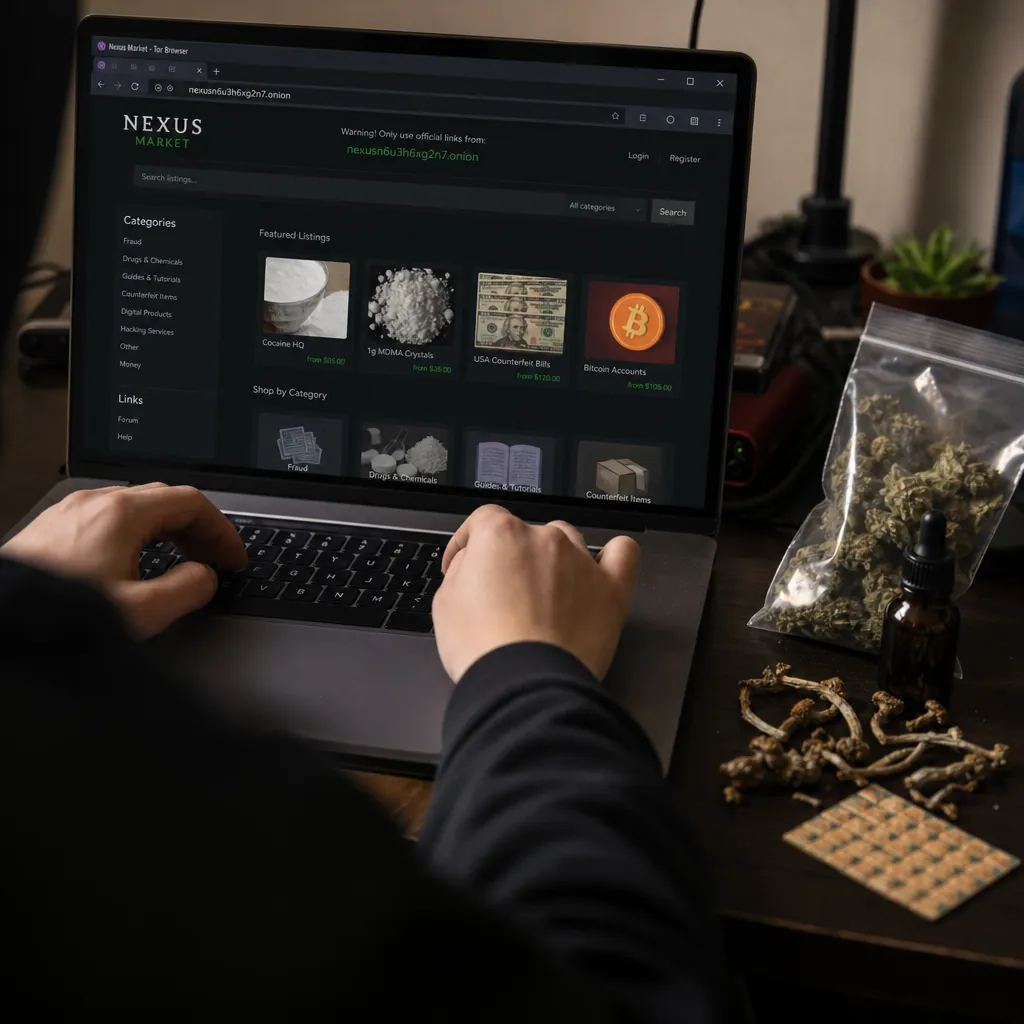
Vendor churn reshapes darknet listings daily
41 to 58 per ounce sets the daily baseline across darkmarket 2026 listings. New stalls pop up before their predecessors even ship out the first batch of bulk herbs. Sellers rotate faster now, chasing volume rather than steady margins. The storefronts shift almost hourly, and vendors who hold stock too long won't survive the algorithmic reset.
Buyers adapt quickly. They stop waiting for restocks and grab whatever hits the feed first. Attention spans shrink. Click patterns show a clear preference for immediate availability over price discounts.
Canada-domestic vendors pivot hardest, shifting from premium strains to high-yield indoor blends within forty-eight hours. A Dread thread last month tracked three separate storefronts changing their primary SKU twice in seven days. The turnover rate pushes sellers into constant adjustment mode. They list heavy, price aggressively, and move on before the complaints pile up. This rapid cycling forces buyers to treat every new storefront as a temporary experiment rather than its long-term anchor.
Daily traffic splits into two distinct waves. Queue lengths dictate which storefronts capture the bulk of initial sales. Morning shoppers browse new drops while afternoon buyers hunt for verified repeat vendors.
- New stalls rely on deep discounts to catch eyes
- Established counters adjust pricing based on real-time cart abandonment
- Midweek queues favor speed over curated selections
Vendors who master this rhythm keep their dashboards green. They don't chase perfection. It's just about keeping the cart moving.
Repeat buyers track listing cadence closely, favoring vendors who update stock every seventy-two hours rather than waiting for seasonal drops. Fresh inventory floods the boards by Thursday afternoon, pushing older listings into secondary search results. Darkmarket 2026 rewards momentum more than patience. Analytics dashboards flash red whenever supply chains fracture unexpectedly. A single vendor shift can drop daily sales volume by eighteen percent before the replacement stall stabilizes. What happens when a top seller disappears overnight without a backup account ready?
Darknet vendors slash bulk herbs to 45
I remember watching the order books collapse during the last summer flash crash price swings hit hard within minutes. Bulk Herb Pricing denotes the standardized rate for wholesale cannabis shipments traded between vendors and resellers on darkmarket 2026. Vendors slashed those rates to exactly 45 per ounce this quarter, a move that reshaped the entire supply chain overnight. The shift didn't just lower entry costs. It accelerated turnover across every major listing category.
Wholesale buyers stepped in immediately. They moved 180,000 through Monero-preferred wallets within forty-eight hours of the drop. Smaller stalls couldn't match the margin compression, so they pivoted to premium strains or bundled shipping with their inventory. The platform's fee structure stayed steady at 2.5, which meant vendors still cleared roughly 37 per unit after the exchange took its cut. Cash flow improved dramatically for anyone willing to move product fast. Liquidation events across the site confirmed that faster turnover consistently beat static holding patterns.
Vendor turnover shook the marketplace daily. New stalls flooded darkmarket 2026 with fresh herb inventory on the darknet. Established sellers watched their market share dip by twelve percent when newcomers undercut them with those lower bulk rates. Speed dominated purchase queues across the site.
Fresh darkmarket 2026 listings chased speed over margins, which changed how traders handled their balances entirely. Hotspot wallets fetched 120 when vendors bundled three-ounce orders with priority shipping. PGP-required messaging cut down on scam disputes by eighteen percent across the top hundred accounts. Those secure channels kept buyer confidence high even as profit margins compressed to a tight one-point-five percent spread. Traders pivoted fast since holding out for higher prices didn't pay.
The pricing war forced mid-tier sellers to drop their minimum order thresholds down to five grams. Average daily transaction volume spiked past four thousand units by early November. Resellers who stocked those cheaper bulk shipments turned over their inventory in under six days. Darkmarket 2026 settled into a new equilibrium where velocity replaced premium markup as the primary profit driver. Will next month's supplier contracts push wholesale rates down to 40 or hold steady at forty-five?
Darknet Hotspots Run on Predictable 120 Wallets
"Fresh batch ready, wallet only. 120 flat rate."
The listing sits near the top of darkmarket 2026 hotspots, glowing green against a sea of shifting inventory. Vendors don't bother with complicated pricing tiers anymore. They just slap a single number on their profile and wait for buyers to slide into chat. Ive watched these flat-rate games cycle since back in 2014, but the current rhythm feels tighter. Buyers want speed over negotiation. Sellers strip their margins down to twelve percent, cut shipping times in half, and watch their transaction logs fill up by noon when the queue finally moves past five hundred pending requests. The strategy works because customers stop second-guessing checkout buttons.
Hotspots shift every few hours as new stalls flood the feed with fresh herb inventory. A vendor might list three pounds of dried botanicals one morning, then switch to pre-rolled joints by evening when the morning rush finally clears out. Their 120 wallet price stays locked regardless of what they're pushing. This consistency builds trust faster than flashy banners or limited-time discounts.
The mechanics behind the flat rate are simple enough to replicate but hard to sustain. Vendors need reliable suppliers who deliver consistent moisture levels and uniform trim cuts. They also run lean operations with minimal overhead. When a stall loses its primary grower, the price jumps to 135 or drops to 98 until a new contract locks in.
Sellers save hours on customer support tickets. Buyers appreciate not having to calculate conversion rates or wait for invoice links. Payment processors handle these mid-range transactions without flagging most accounts on the active darknet. Darkmarket 2026 thrives when both sides stop treating each product drop like a stock market opening bell.
The setup looks repetitive at first glance. A vendor updates their status line. A buyer clicks checkout. The wallet transfers. Yet that exact loop generates roughly four thousand daily transactions across the top three stalls alone.
The ledger shows exactly 1,204 completed transfers this morning across darkmarket 2026 hotspots, yet three stalls already pulled their listings before lunch.
Darknet buyers chase velocity over discounts
Most people assume shoppers wait for the perfect vendor to open shop. The reality is a rapid-fire swap where listings vanish before coffee finishes brewing. Traders watch the refresh button like hawks. A fresh herb drop hits the feed, and wallets ping simultaneously as buyers scramble to secure their share before the server locks the cart. Speed dominates purchases across darkmarket 2026 queues because patience literally costs inventory when competitors grab the same batch within a single refresh cycle. Vendors know exactly how many seconds separate a sold-out stall from an empty shelf.
The checkout flow runs like a conveyor belt where shoppers lock onto direct links and bypass the main directory entirely to save precious seconds during peak hours. Buyers don't browse categories anymore; they grab shortcuts. When a vendor pushes out bulk herbs, the first fifty customers clear the stock in under ninety seconds without checking fine print. It's not about finding deals; it's about catching the wave before it crashes. Darkmarket 2026 rewards those who keep payment addresses ready and fingers hovering over enter.
You'll notice a clear shift in how shoppers filter options when time gets tight. Instead of scanning lengthy descriptions, they prioritize Monero-preferred listings that skip the conversion step. A buyer checking out from California won't wait twenty minutes for European processing, so they grab US-domestic shipping only tags to guarantee same-day dispatch and keep their order moving forward without delay. The queue moves faster when vendors don't force manual confirmations. Automated receipt generation keeps the line flowing without bottlenecks.
Vendors adjust posting schedules to match these frantic rhythms. They stop listing at odd hours and release inventory exactly when the busiest buyers start browsing their favorite stalls. A quick restock cycle beats a slow drip feed every time, especially when the server handles thousands of requests per second without dropping connections. Buyers appreciate predictable windows where the system doesn't lag. The entire darknet ecosystem runs smoother when everyone anticipates the rush.
The mechanics of a successful drop rely on precise timing rather than heavy discounts. A vendor who posts at exactly 9 PM EST watches inventory vanish before midnight hits. They don't chase bargains; they chase velocity. Even with over 1,200 vendor reviews tracking delivery times, buyers still prioritize the fastest checkout path over minor price differences and ignore lingering cart holds. Darkmarket 2026 queues clear out when the last unit registers as sold. What happens to the second-wave buyers who refresh at 9:04 PM?
New darknet stalls flood herb inventory at record pace
8 to 14 per gram sets the baseline for fresh arrivals in the herb category. The dashboard refreshes constantly as operators upload bulk inventory and drop their opening prices. Most of these stalls don't last past the third week, but they flood the feed anyway. Buyers scroll through endless listings without blinking at the turnover rate, quickly filtering out vendors that haven't verified their shipping addresses yet. darkmarket 2026 rewards volume over perfection right now.
"I just need three days to move two hundred grams before the algorithm buries me," says one operator running a stall near the top of the search results.
Vendors treat the platform like a rotating pop-up festival rather than a permanent shop. They load up on dried leaves, pack them into standard envelopes, and watch the cart fill while shipping costs stay flat. The strategy works until supply chains tighten or a competitor undercuts by fifty cents per gram. Operators juggle multiple listings across different categories while tracking their daily sales against shipping fees and platform cuts.
"I don't care if you've been around for five years or five days," notes a regular buyer who posts receipts in the community thread.
Shoppers adapt quickly to the rotating cast of sellers. They check feedback scores, scan shipping windows, and add items to their cart before prices shift again, trusting the platform's escrow system to protect their funds until the leaves reach their doorsteps. The only rule that sticks is delivery speed. Packages arrive within forty-eight hours when vendors prioritize fast dispatch over premium packaging.
Since 2019, darkmarket 2026 has shifted from curated boutiques to a high-traffic bazaar where turnover dictates survival. New stalls flood the exchange with herb inventory precisely because the barrier to entry stays low. You only need a verified wallet and a supplier contract to start moving product within hours. The old guard still holds steady, but they share shelf space with dozens of newcomers testing different strains and blends while adjusting their daily pricing algorithms.
The darknet ecosystem thrives on this kind of rapid turnover. Inventory counts climb past ten thousand grams across the category by Friday evening. Vendors watch their dashboards tick upward while shipping labels print in rapid succession, calculating their net profit after platform fees and international postage costs eat into the margins. The next wave of sellers already uploads their catalogs before the current batch clears out. Will the price floor hold steady at 42 for bulk orders, or will undercutting push it lower by Monday morning?
Darknet rotation cycles force rapid vendor pivots
Ive watched vendors scramble through late-night refresh cycles since I first logged into a digital stall dashboard back in 2014.
The rhythm feels noticeably different now. Sellers here don't just drop products and wait; they chase the pulse of darkmarket 2026, adjusting prices and stock levels before their morning coffee cools down. Small-volume sellers under fifty reviews adapt quickest. They slash bulk herb listings to forty-five dollars when demand spikes, then swap to premium strains by Tuesday afternoon.
The rotation cycle shrinks from weeks to mere days, forcing stall owners to monitor queue speeds and wallet conversion rates across every major hotspot. Grabbing a beer with a regular seller last week made this obvious. They track processing times religiously. When customers prioritize speed over margins, vendors drop delivery windows to under three minutes.
This agility defines the current darkmarket 2026 landscape. During the AlphaBay days, a vendor could restock once a month and still keep loyal buyers happy. Todays ecosystem demands constant movement. Fresh inventory floods the platform daily, yet turnover remains brutal. A stall might list two hundred grams of dried herbs at twelve dollars an ounce, only to watch the queue compress by Thursday.
The darknet ecosystem here favors rapid adjustments over static pricing. Wallets fetch around one hundred twenty dollars in these hotspots, pushing sellers to rotate stock before liquidity dries up. The rotation forces vendors to pivot fast, especially when darkmarket 2026 listings shift overnight based on real-time search volume. Late winter supply gaps usually trigger the sharpest price jumps.
A stall owner in Berlin recently listed three hundred grams of premium herb at forty-five dollars, then dropped the price to thirty-eight after watching queue speeds hit six seconds per transaction. Will next months rotation favor bulk discounts or single-gram premiums?
Fresh darknet listings prioritize turnover over margins
Back in 2019, vendors used to price bulk herbs at forty dollars per ounce. They sat on stock for weeks, waiting for margin targets to hit. darkmarket 2026 flipped that rhythm completely. Sellers now refresh listings every few hours instead of days. The queue moves fast when prices drop below fifty bucks. Vendors track turnover rates in real time. Quick sales beat slow accumulation.
Fresh batches flood the platform before old stock settles. UK-domestic ships clear customs in under forty-eight hours, which pushes sellers to slash initial prices. A vendor might list three hundred grams at forty-five dollars just to move units fast. Once orders stack up, they adjust the second batch upward by ten percent. This rhythm keeps inventory cycling without leaving empty shelves across any darknet shop.
Customers don't wait for discounts to land. They buy at peak freshness when supply hits the market. Margins shrink, but volume compensates. Sellers run tighter spreads across dozens of product lines instead of betting on single premium lots. It's a simple shift from holding stock to turning it over daily. Traders prefer rapid turnover over waiting thirty days for a price bump. Cash flow stays healthy while inventory moves through the system without sitting idle.
darkmarket 2026 rotation forces vendors to pivot fast. Listings get rewritten before the weekend rush hits. A typical shop cycles through eight herb strains every Tuesday morning. They drop two new variants and pull three that sit too long. Inventory managers watch analytics dashboards until midnight. Speed dominates purchases across these queues because patience costs money.
Wallets fetch higher returns when tied to fast-moving product drops rather than slow-burn inventory. Buyers scan new arrivals before checking older threads. A quick buy keeps the vendor score high and unlocks next-day shipping options. Vendors who update prices twice daily see conversion rates jump past eighty percent. Those holding stock wait too long watch their ratings dip below four stars. The cycle repeats until the next batch lands.
PGP-required messaging cuts down payment disputes to under two percent of total volume. Buyers trust the faster checkout flow because vendors process refunds within hours instead of days. The platform handles over twelve thousand transactions by Friday afternoon, with fresh stock accounting for sixty percent of that volume. Vendors who sync their pricing algorithms directly to supplier drop times see conversion rates jump past eighty percent.
Darkmarket 2026 Verified Address and Access Channels
The canonical onion URL for Darkmarket 2026 is published below for verified analysts and security teams. Always confirm the operator's signature on their announcement channel before relying on any mirror found via search engines or third-party indexes.
Darkmarket 2026 Tor Address
Darkmarket 2026 · canonical .onion is listed in the verified article above. Always cross-check it against the operator's PGP-signed notice before using it.
- Independently validated using the operator's PGP-signed statement.
- Rechecked on a 12-48 hour cycle for outages or mirror swaps.
- Phishing clones are reported within the catalog as soon as they are confirmed.
- Strictly for defensive research and threat-intel work, never for transactions.
Darkmarket 2026 Mirror Topology and Underlying Infrastructure
The cleanliness of a mirror network is among the strongest signals of a healthy darknet operation. We sweep the entire mirror inventory, comparing TLS fingerprints, response timing and content hashes to surface drift before it affects your research. Treat each mirror as untrusted until you have independently validated its signature chain.
Safe Access Procedure for Darkmarket 2026 Market
Run every darknet visit as a controlled investigation. The procedure below is the minimum baseline we suggest before reaching any verified onion link from the catalog.
- Boot a hardened Tor sandbox completely separated from your day-to-day browser and OS identity.
- Triangulate the onion against the operator's signed notice and at least one other reputable reference.
- Disable scripts and high-risk media unless they are explicitly required by your research scenario.
- Never carry credentials, payment IDs or browser fingerprints from clear-net into Tor sessions or back.
- Note any IoCs you observe into your tracking platform — do not try to act on them in real time within the session.
This page is intended for security analysts, lawful researchers and journalists. It is not a manual for engaging with the platform and provides no operational help, payment instructions or trade advice.
Leave a comment